Vistra's Moss Landing battery site catches
A fire broke out at Vistra's damaged Moss Landing battery facility in California, involving batteries previously damaged in a major 2025 blaze.
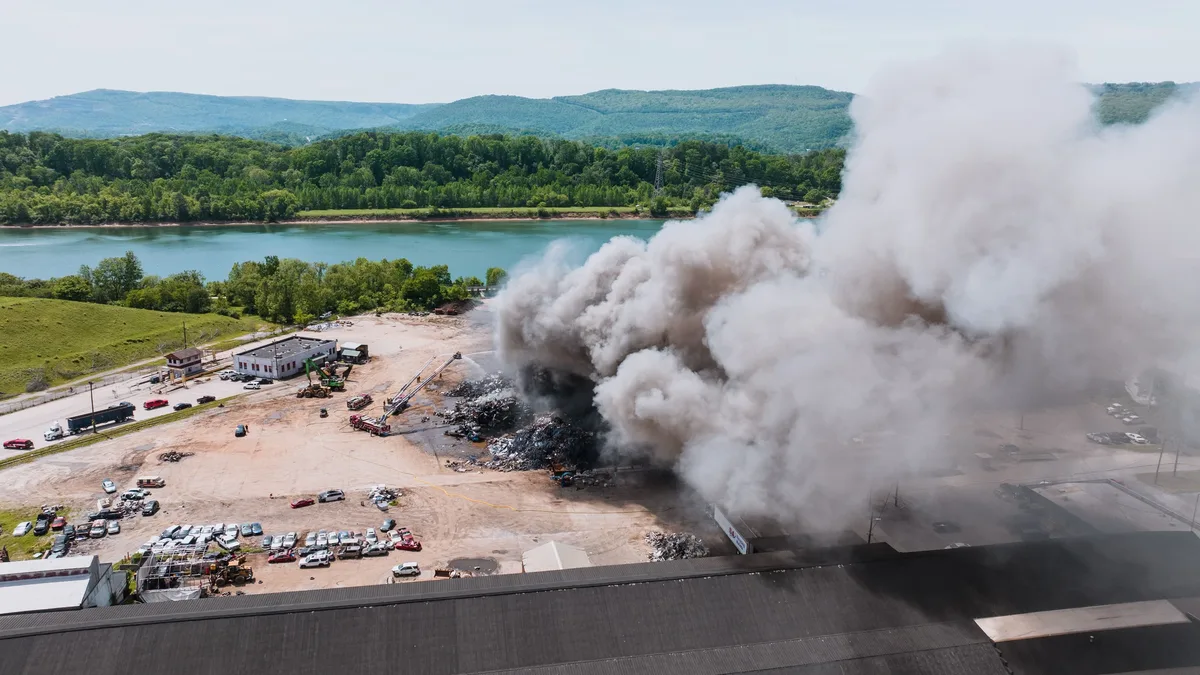
A fire ignited again at Vistra's Moss Landing battery energy storage site in Northern California on Friday morning. The blaze involves batteries that were damaged in a catastrophic fire at the same facility in January 2025, according to a statement from Monterey County officials.
Authorities stated the new fire is not comparable in size to the 2025 conflagration. They anticipate it may burn out over the next 24 hours. The site is located on the California coast south of Santa Cruz. Vistra did not immediately respond to requests for comment from Canary Media.
Demolition and Site Status
Vistra has been working to demolish the site since the 2025 fire. The process involves laboriously removing intact batteries from the building, de-energizing them, and shipping them for recycling or disposal. Workers had already extracted 34,000 battery modules. They hoped to finish extracting the last 5,000 modules later this year. Officials noted those remaining batteries may carry some residual charge.
Utility Pacific Gas & Electric operates grid infrastructure adjacent to Vistra's site. A PG&E spokesperson confirmed the fire did not start on or spread to utility property. PG&E took its neighboring Elkhorn battery plant offline after the 2025 Vistra fire to assess damage. The utility plans to resume service at Elkhorn on July 1, 2027.
Local Impact and History
Authorities issued shelter-in-place orders for the surrounding seaside community. The area is known for its wildlife, including sea otters and whales. For locals, fires at Moss Landing have become a surprisingly regular occurrence.
David Robinson witnessed the latest plume from his boat in the nearby harbor. "It seemed like once a year there'd be some smoldering going on," Robinson said. "Then of course the big fire last year pretty much shut everything down.... Now it's like, man, when is this going to end?"
Design and Safety Context
The January 2025 fire stoked nationwide concern about battery safety. Developers looking to build batteries elsewhere commonly have to address fears of a similar incident. However, Moss Landing's fire vulnerabilities are rooted in designs that have fallen out of use.
Vistra used a less-stable battery chemistry than today's installations. The facility was designed in a way that is not up to current safety standards. Vistra opted to reuse a former gas turbine structure it owned. Today, storage developers build large batteries using modular containers spaced out in a field. These are designed to fail safely so a fire in one container cannot propagate.
Battery chemistries have also evolved. Moss Landing used a nickel-manganese-cobalt lithium-ion recipe common in electric vehicles. The stationary grid-storage industry has since largely switched to lithium ferrous phosphate, a safer chemistry.
Industry Growth and Role
Energy storage is the fastest-growing source for on-demand electricity capacity in the country. Battery growth is particularly rapid in California and Texas. The technology helps bank low-cost solar energy during sunny hours for use in the evening. This combustion-free electricity pushes down power prices and has helped avoid shortages during record heat waves.
The latest fire does not reveal new information about the safety of modern battery installations. It does, however, rekindle old problems the industry must continue to answer for.