Solar and Storage Undercut Gas Peakers Globally by 2026
Four-hour battery storage is now cheaper than new gas peaking plants in all modeled global markets, with U.S. costs 65-75% lower.
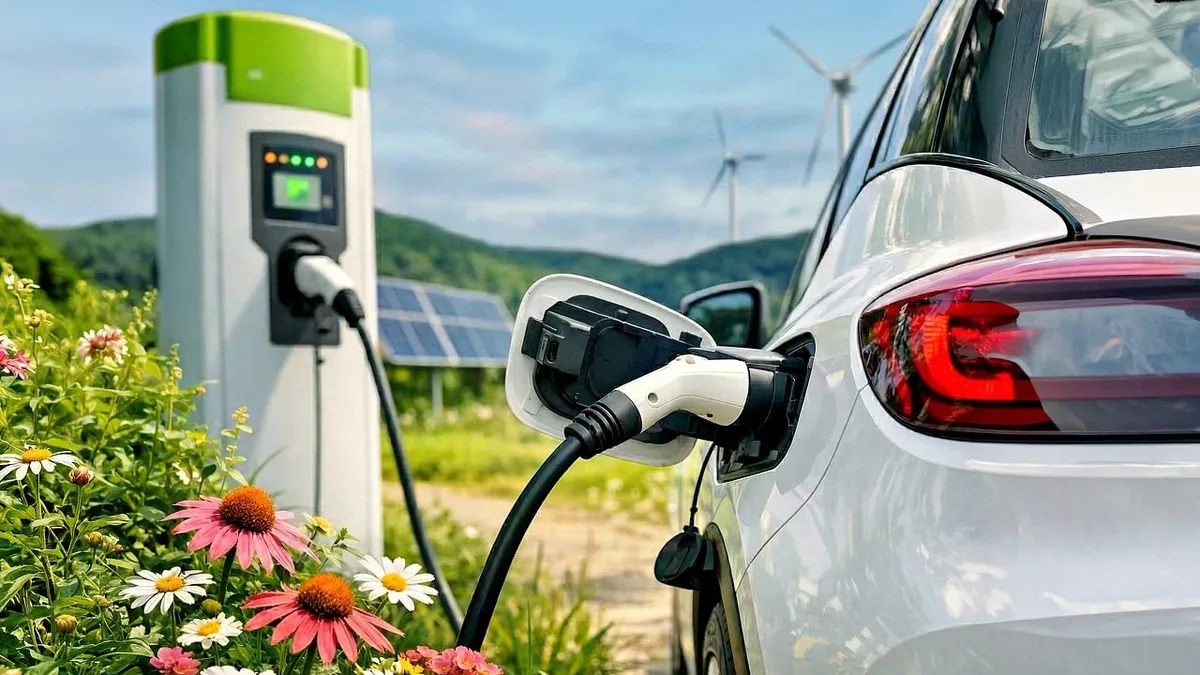
Four-hour battery storage is now cheaper than open-cycle gas turbines in all 43 markets where both technologies were modeled. In the United States for a 2026 commercial operation date, 4-hour battery storage is 65% to 75% cheaper than new open-cycle gas turbine peakers. This global cost shift is reinforced by data center demand and gas turbine supply constraints, which are boosting the investment case for renewables and storage.
Gas turbine prices are projected to rise to $600/kW by the end of 2027, a 195% increase since 2019. The three major gas turbine manufacturers have backlogs ranging from 35 GW to 116 GW. Ahmed Jameel Abdullah noted, "Gas turbine shortages and rising fuel volatility are driving up peaking costs, while expanding battery manufacturing continues to push storage costs down." Investment in gas generation capacity in North America is entering a supply deficit cycle through the late 2030s due to data centre load growth.
Solar leads in most markets
Single-axis tracker solar is the lowest-cost new-build technology in 43 of 48 modeled markets, with onshore wind leading in the remaining five. This dominance shows solar's position as the most cost-competitive power source for new projects globally.
Regional cost trends reinforce the shift
Solar and storage costs are set to fall further across key regions. In the most competitive markets, Saudi Arabia and the UAE, solar LCOE is on track to fall below US$20/MWh by 2033. Middle East and Africa single-axis tracker solar averages $37/MWh in 2026, with four-hour storage costing $120/MWh. Storage is forecast to fall 33 percent to $80/MWh by 2035 in the region.
Latin America maintains a structural cost advantage in solar due to world-class resources in Brazil, Chile, and Mexico. Average solar costs there are forecast to decline 38 percent by 2060. The region's storage LCOE is also forecast to fall 42% by 2060, while onshore wind LCOE is expected to drop nearly 21% by 2030.
| Region | Technology | 2026 Cost/Forecast | Key Future Trend |
|---|---|---|---|
| Middle East & Africa | Single-axis tracker solar | $37/MWh average | To fall below $20/MWh in Saudi Arabia/UAE by 2033 |
| Middle East & Africa | 4-hour storage | $120/MWh | To fall 33% to $80/MWh by 2035 |
| Latin America | Onshore wind | $73/MWh | To fall to $58/MWh by 2030 |
| Asia Pacific | Storage (ex-China average) | $134/MWh | Chinese supply to pull average to $92/MWh by 2036 |
North America faces near-term solar and storage pressures
In North America, near-term solar costs are rising due to tariffs and new import restrictions. Utility-scale solar module prices are expected to rise around 5% annually through 2030. Residential and commercial projects face a more constrained environment, with module prices forecast to increase 6% in 2027 and a further 14% in 2028. For storage, tax credits currently provide a competitive advantage, but a cost spike is anticipated following the phase-out of ITC credits from 2038. Long-term drivers like new battery chemistries and domestic supply chain expansion are still expected to drive storage LCOE down 10% by 2060.
Asia Pacific shows divergent cost trajectories
China remains the global storage cost benchmark, with LCOE more than 55% below the rest of the Asia Pacific average. This advantage reflects integrated domestic supply chains and manufacturing scale. Competitive Chinese supply is expected to pull the Asia Pacific average storage LCOE down to $92/MWh by 2036. Other markets like Japan, Australia and the Philippines will retain higher costs due to import duties and policies. Cost gaps are widening: in 2026, solar generation in the highest-cost Asia Pacific market is more than 200 percent more expensive than in the lowest-cost market, a gap expected to reach 250% by 2030.
In Europe, fossil-fuel generation carries the highest costs of any modeled region, with levelized carbon costs projected to surpass fuel costs by 2030. Europe's battery storage capex is forecast to fall 12% by 2031 after a recent slight increase. Offshore wind costs outside China are under near-term pressure, with meaningful declines expected from the early 2030s. Four-hour battery storage is already cheaper than gas peakers in every modeled market, and this advantage is expected to grow as storage costs fall and gas prices rise.