Kentucky Nuclear Campus Aims to Be Largest U.S. Power Site
The Nuclear Company proposes a 6.6-gigawatt AP1000 reactor campus in Lewis County, Kentucky, which would be the state's first commercial nuclear project and the biggest nuclear site in the United States.
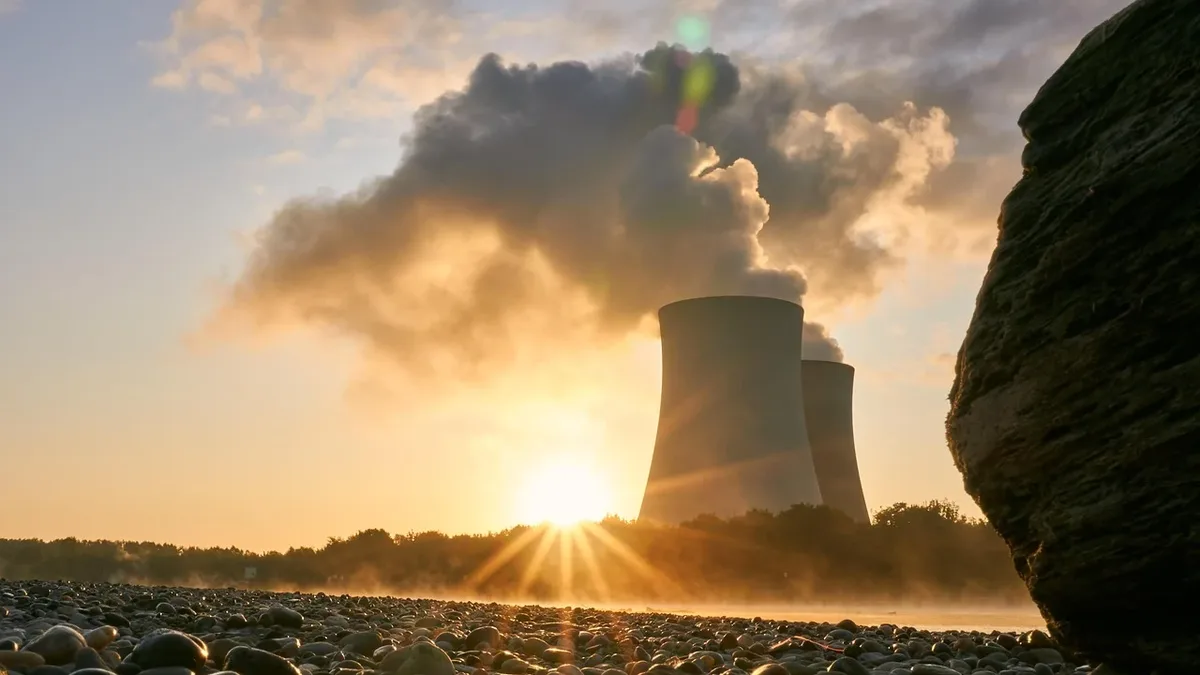
The Nuclear Company has unveiled plans to develop a 6.6-gigawatt nuclear power campus in Lewis County, Kentucky. The Prosperity One campus is designed to host as many as six Westinghouse AP1000 reactors, a project that would rank as the largest nuclear generating site in the United States if fully built.
Local Support and Community Readiness
Local resident and site owner Sam Howard has partnered with the company to advance the project. He cited high local unemployment as a reason for his support, arguing the development could create jobs and economic opportunities for younger generations in the county.
State policy has paved the way. Kentucky repealed restrictions on new nuclear construction in 2017 and established the Kentucky Nuclear Energy Development Authority in 2024. Lewis County began seeking designation as a nuclear-ready community in July 2026 and submitted its application that October. State law requires public educational meetings, identification of suitable sites, and evidence of local government or voter support for such a designation.
The Nuclear Company has not yet identified a utility partner for Prosperity One or indicated whether it will seek funding through the related state support program. The company's chief nuclear officer is Joe Klecha, who brings 33 years of industry experience including roles at the Vogtle plant. The company's services division has performed maintenance at more than 40 percent of America's operating nuclear facilities.
Regulatory and Financial Context
The company has secured control of the proposed site and plans to start site development work and pursue federal approvals to commence construction in 2028. Initial development activities include site characterization, geotechnical investigations, environmental assessments, transmission interconnection planning, and preparations for federal nuclear licensing.
Key details remain undisclosed. The company has not revealed the project’s estimated cost, financing arrangements, electricity purchasers, or expected commercial operation date. It has also not specified the Nuclear Regulatory Commission licensing pathway or clarified whether the 6.6-gigawatt figure represents gross or net output.
The company emerged from stealth mode in 2024 with plans for a 6-gigawatt nuclear fleet. It opened a primary engineering office in Columbia, South Carolina, in April 2025 and completed a Series A financing round that same month led by Eclipse. In May 2026, it announced a partnership with Brookfield to establish a company focused on deploying Westinghouse technologies. Brookfield selected this new business as project manager for the potential restart of the abandoned V.C. Summer units in South Carolina. It is not known if Prosperity One will be developed through this Brookfield partnership.
A state pilot program, signed into law in April 2026, authorizes support of up to $25 million per project, capped at one-third of qualifying costs. Eligibility requires the applicant to be a utility or partner with one, and the host community must have received its nuclear-ready designation before a grant award.
National and Industry Alignment
The project aligns with significant federal initiatives to support nuclear expansion. In October 2025, the U.S. government announced a strategic partnership with Westinghouse’s owners, Brookfield and Cameco, to support at least $80 billion in new reactor construction using Westinghouse technologies.
Subsequently, on June 23, 2026, the Department of Energy committed $17.5 billion in American Nuclear Supply Chain Loans to support long-lead equipment procurement for 10 AP1000 reactors. This financing could support up to five two-reactor projects and requires equity commitments from Westinghouse and utility partners before funds are drawn. Westinghouse had signed letters of intent with seven prospective partners that had identified potential sites, though the companies and locations were not publicly named.
The AP1000 reactor design was deployed at Georgia's Plant Vogtle, which currently holds the title of largest U.S. nuclear site with approximately 4.5 gigawatts of net summer capacity across four reactors. The Nuclear Company describes its approach as requiring active host community participation across transportation, housing, environmental stewardship, and emergency preparedness. It frames its broader mission as integrating the nuclear deployment chain to scale new builds. The company plans to begin site development and seek federal approvals in 2028 to commence construction.