Senate Passes Bipartisan Energy Permitting Reform Bill
The Senate passed the Bipartisan American Affordability and Jobs Act 62-33, a major permitting reform bill aimed at accelerating energy infrastructure projects. The legislation now faces an uncertain path in the House amid Democratic divisions and opposition from tribal and environmental groups.
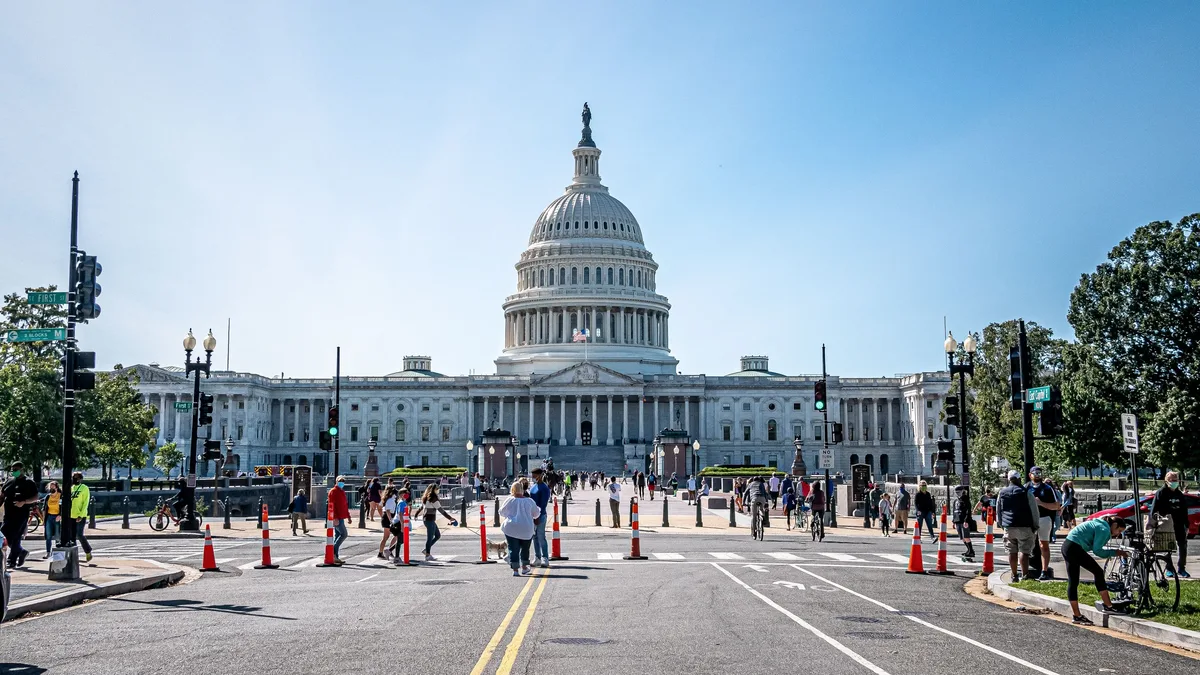
The Senate voted 62-33 to pass the Bipartisan American Affordability and Jobs Act, a sweeping energy infrastructure permitting reform bill negotiated across party lines and backed by the White House. The legislation proposes sweeping changes to federal reviews for power lines, pipelines, mines, and wind and solar farms, aiming to set faster approval timelines and alter key environmental laws.
The bill was supported by 47 Republicans and 15 Democratic senators. It was led by Senators Shelley Moore Capito, a Republican from West Virginia, and Sheldon Whitehouse, a Democrat from Rhode Island, of the Environment and Public Works Committee, along with Senators Mike Lee, a Republican from Utah, and Martin Heinrich, a Democrat from New Mexico, of the Energy and Natural Resources Committee. Thirty-one Democrats and Republicans Josh Hawley and Mike Rounds voted against it. Senate passage occurred despite opposition from some Democrats and one Republican.
Key Provisions and Changes
The bill changes how reviews are run and permits are issued under the National Environmental Policy Act, the National Historic Preservation Act, the Endangered Species Act, the Federal Power Act, and the Clean Water Act. It narrows state and tribal authority to deny projects over water pollution. A permit certainty section would bar an administration from revoking permits already issued, except in emergencies or under new laws or rules.
For developers, the bill allows lawsuits against agencies for disparate treatment with a ten-year lookback. Successful plaintiffs could collect 50% to 100% of expected construction costs plus litigation costs and damages from the federal Judgment Fund. The Federal Energy Regulatory Commission would get new authority over interstate transmission, including more power to approve lines when states block or delay them. An earlier draft would have ended utilities' federal right of first refusal, but the final text lets them keep the right to rebuild aging corridors.
The bill would cut the window to sue over federal approvals to 150 days. Construction could continue even if a court finds a review deficient.
Data Center Provisions and Ratepayer Costs
For data centers, the bill carries a version of the White House's ratepayer protection pledge. It would effectively charge them both for new transmission lines built to serve them and for their use of the existing grid, with FERC implementing the rule. An updated manager's amendment that would have closed a loophole letting AI hyperscalers avoid those ratepayer provisions was not adopted.
Oregon Democrats Ron Wyden and Jeff Merkley wanted votes on barring data centers from federal public lands and from the bill's permit-certainty protections. Republicans did not allow simple-majority votes on their amendments.
Political Divides and Opposition
The bill's future is complicated by Democratic divisions and Republican criticism. Senator Raphael Warnock, a Democrat from Georgia, voted against the bill, stating he hoped a robust amendment process could address shortcomings. He believes a better bill can be passed when the new Congress is sworn in in January. Representative Scott Peters, a Democrat from California, rebuked the idea that a better deal will be available, stating bipartisanship is unavoidable with Donald Trump in the White House and 60 Senate votes required.
Senator Josh Hawley, a Republican from Missouri, voted against the bill, calling it stuffed with giveaways to data centers and industry at the expense of farmers. Senator Catherine Cortez Masto, a Democrat from Nevada, voted yes but criticized the bill for lack of consideration for tribal nations. She said the bill ignores Tribal input and makes changes to the National Historic Preservation Act that Tribes do not support.
Major industry groups including the American Petroleum Institute, the American Clean Power Association, the U.S. Chamber of Commerce, the National Association of Manufacturers, and the Edison Electric Institute endorsed the bill. The National Rural Electric Cooperative Association celebrated the passage, noting the final bill includes an exemption for electric co-ops from unnecessary transmission regulation by FERC. CEO Jim Matheson said the legislation will dramatically improve the federal permitting system.
Tribal and Environmental Opposition
Tribal nations and major environmental groups oppose the bill. The Natural Resources Defense Council opposes it, with President and CEO Manish Bapna saying lawmakers should oppose it and try again next year for legislation worthy of the American people, not for the fossil fuel industry and data center companies. The Sierra Club, a coalition of 17 Democratic-led states, and the National Congress of American Indians also oppose it. Opponents argue the bill undermines tribal authority under the National Historic Preservation Act and weakens protections for water pollution and endangered species.
The bill faces an uncertain path in the U.S. House of Representatives. The House takes the bill up after Thanksgiving. Speaker Mike Johnson says it can pass, while some Democrats want to wait for the next Congress.