DOE Offers $2.8 Billion Loan for Wyoming Intertie Transmission
The U.S. Department of Energy has offered a conditional $2.8 billion loan to support the 1.8-GW Wyoming Intertie transmission project.
The U.S. Department of Energy has offered up to $2.8 billion in conditional financing for the Wyoming Intertie transmission project. The conditional commitment, announced on November 17 by the DOE’s Office of Energy Dominance Financing, would cover 80% of the project's construction costs across a 30-year term.
Project Scope and Capacity Impact
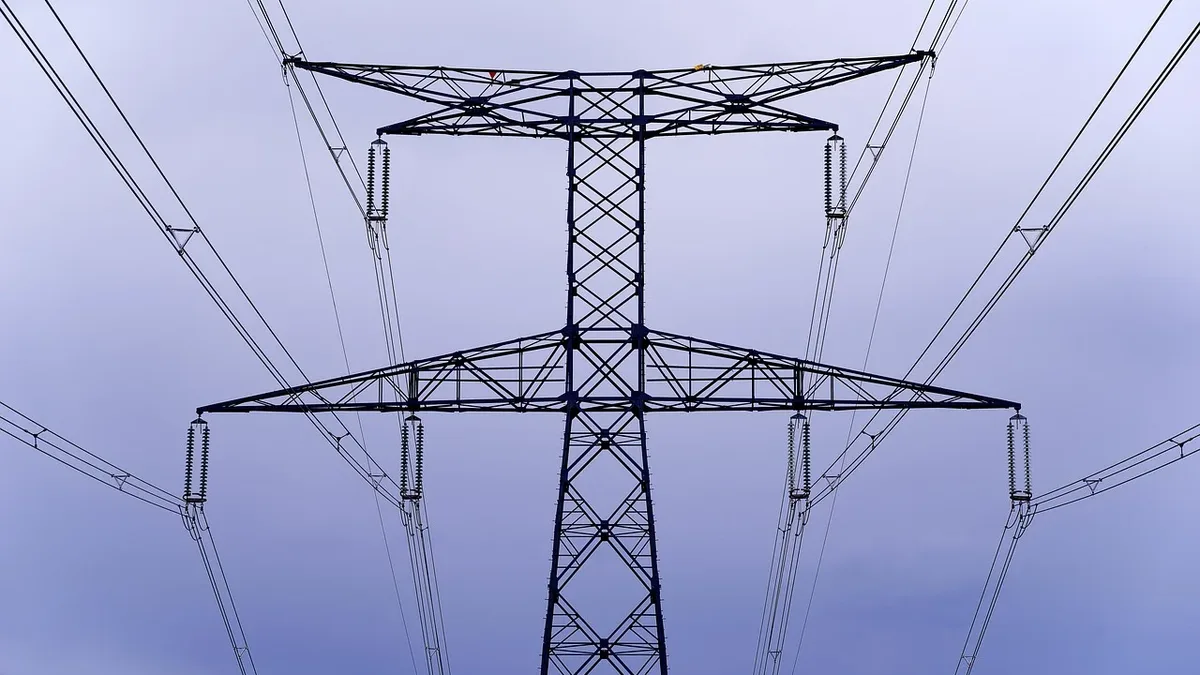
The Wyoming Intertie is a proposed 1.8-gigawatt, 106-mile transmission project in southeastern Wyoming. This project could more than double the existing power transfer capacity between the Eastern and Western Interconnections, which currently totals just 1,320 megawatts. The infrastructure will span Carbon, Albany, and Platte counties.
It is designed as a networked grid asset. "As a networked grid infrastructure asset, Wyoming Intertie will not directly connect to any specific generation or demand source," said Grid United. The line would accommodate power from all generation technologies.
Technical and Regulatory Framework
The project relies on high-voltage direct current back-to-back converter station technology. This HVDC technology allows for bidirectional power flow between the asynchronous western and eastern grids. The voltage-source converter-based station would provide rapid control of power flows, voltage regulation, and black-start restoration capability.
The massive loan is not yet final. It is conditional on Grid United satisfying a series of technical, legal, environmental, and financial conditions before definitive financing agreements are executed. Disbursements would begin only after the project receives a notice to proceed and enters construction.
A complex permitting pathway lies ahead. The project requires an Industrial Siting Certificate from the Wyoming Department of Environmental Quality and conditional use permits from Carbon and Platte counties. Environmental reviews under the National Environmental Policy Act are also required for portions of the route on federally owned land. State and county permitting processes are anticipated in 2027 and 2028, with federal approval expected in 2029.
Financial and Economic Benefits
The DOE estimates the project could yield up to $39 billion in electricity cost savings across 17 states in the WECC and SPP regions. Grid United estimates the lower federal borrowing rate would itself yield more than $500 million in ratepayer savings compared with private market financing.
Grid United began field surveys in 2023 and acquired right-of-way options in 2024. The company entered the Coordinated Interagency Transmission Authorization and Permitting process in 2025. Construction could begin as early as 2030, with commercial operation projected in 2032 or 2033.
The developer has not publicly identified capacity customers. Financial close requires commercial capacity contracts, completed right-of-way acquisition, and all necessary regulatory approvals.