Energy Innovation Proposes Off-Grid Data Center Energy Parks
A new report outlines a model for powering data centers with co-located renewables, battery and thermal storage, and minimal diesel, aiming to bypass grid constraints and speed deployment.
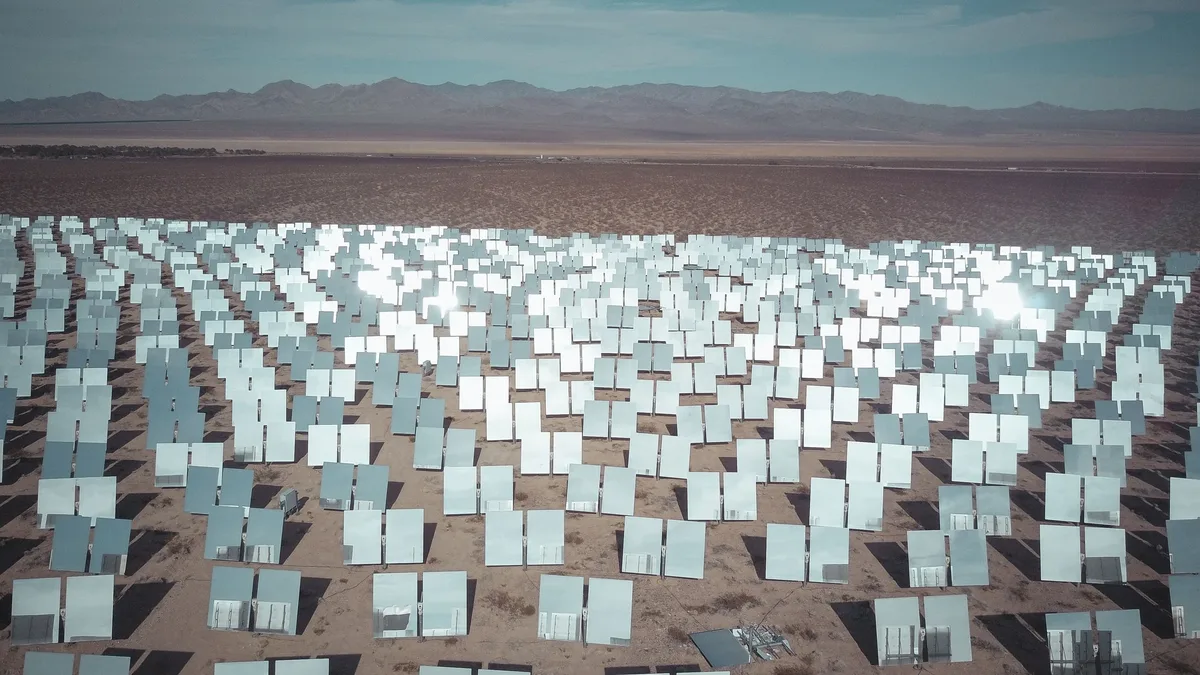
A new report proposes co-located energy parks using renewables, battery and thermal storage, plus minimal diesel, to power data centers without a grid connection. The analysis from Energy Innovation, authored by James Downing and published on November 20, 2026, frames this off-grid approach as a solution for fueling rapid data center expansion independent of utility infrastructure and natural gas pipelines. The model combines onshore wind, utility-scale solar, various electric storage technologies, and a small amount of trucked-in diesel burned in boilers to ensure resource adequacy.
Data centers represent one of the fastest-growing large load additions to energy systems. A single facility can increase a local peak power load by 50 percent or double it almost overnight. For context, energy and infrastructure expert Diane Watkins notes that a traditional utility might take a century to reach a peak load of 1,000 megawatts. This speed to power creates profound grid integration challenges.
Power growth challenges
Beyond sheer load growth, data centers have a significant environmental footprint. A referenced Harvard map includes 403 data centers with a combined carbon dioxide output of 25.7 million tons annually. To manage grid impact, research from Lawrence Berkeley National Laboratory identifies three flexibility mechanisms: temporal load shifting, spatial load shifting, and intensity flexibility. Grid-interactive software can treat non-urgent computing workloads as a controllable resource, pausing or relocating jobs during demand spikes.
Storage and technology solutions
The proposed energy parks rely on a mix of storage technologies to ensure reliability without grid connection. Lithium-ion batteries would provide bridge power for minutes until longer-duration systems activate. For sustained operation, the report points to long-duration energy storage options.
| Technology Type | Designed Storage Duration |
|---|---|
| Iron-air batteries | 10 to 100 hours |
| Redox-flow batteries | 10 to 100 hours |
| Thermal-energy storage | 10 to 100 hours |
Advanced cooling systems are also critical for efficiency. Direct-to-chip and immersion cooling methods capture heat roughly 3,500 times more effectively than traditional air cooling for high-density racks exceeding 100 kW. The American Council for an Energy-Efficient Economy recommends a sequence of efficiency upgrades first, including hot-aisle containment and airflow right-sizing, before adopting those advanced solutions.
Supporting technologies continue to emerge. Behind-the-meter microgrids and solid-oxide fuel cells allow campuses to generate, store, and consume power without crossing the utility billing boundary. Redwood Energy plans to use one terawatt-hour of used electric vehicle batteries for second-life storage behind data centers. For safety, Ampace has conducted fire tests on its PU200 and PU100 battery systems designed for AI data centers. QuantumScape claims its QS PowerBlock offers four times the power density and five times the runtime for one-megawatt racks, though these are company claims without independent verification.
Policy and permitting context
The shift to on-site generation carries regulatory implications, as illustrated by recent actions in Texas. State regulators there resumed issuing air permits for data centers, with SpaceX's 750-megawatt facility highlighting how large on-site generation changes the permitting landscape. The broader industry discussion is evolving. Speaker Mikhael stated that the constraint is no longer just megawatts, implying a more complex set of infrastructure and flexibility challenges. Energy commentator Nelson argued that without a major breakthrough in energy storage, large-scale nuclear energy will be needed to meet future demands. Advanced nuclear designs from companies like Kairos Power, TerraPower, and X-energy, with capacities ranging from 50 to 345 megawatts, represent one potential path for campus-scale power.
The report ultimately focuses on co-located generation as a direct response to the unprecedented speed of data center power growth.