Energy Security and Load Growth Reshape U.S. Power Equipment
A U.S. Executive order targeting foreign bulk-power equipment, combined with rapid load growth, is shifting focus from generation cost to infrastructure
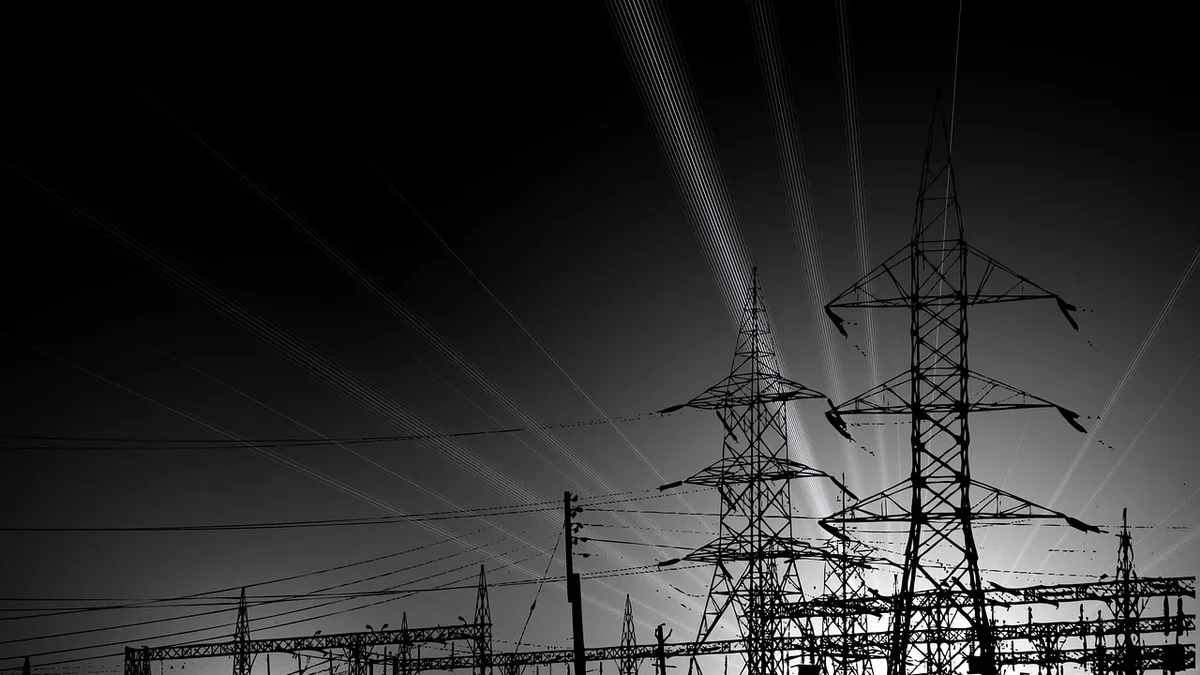
America's electricity challenge is now an infrastructure challenge. While generation costs remain important, the demands of artificial intelligence, data centers, and electrification reveal a critical constraint: electricity must also be reliably transmitted and delivered. This shift places substations, transformers, circuit breakers, and protective relays at the center of energy strategy.
On August 26, 2026, President Donald Trump declared a national emergency concerning risks from foreign-produced equipment in the U.S. Bulk-power system. The Executive Order targets specific hardware and extends to software and remote-access capabilities. For the power-equipment industry, this policy, combined with rapid load growth and aging infrastructure, could create a significant domestic market for new equipment and long-term support.
Energy Security Alters Equipment Evaluation
The August 2026 order is not a blanket ban on all foreign electrical equipment. It focuses on the bulk-power system and transactions involving equipment that may pose unacceptable security or supply-chain risks. This represents a change in how electrical infrastructure is judged.
Traditionally, equipment was evaluated on performance, reliability, cost, and lead time. Those criteria remain, but provenance, firmware integrity, component sourcing, and long-term supply assurance may now carry greater weight. The order also authorizes the Department of Energy to establish pre-qualification procedures for equipment and vendors.
This could give American manufacturers a competitive advantage beyond factory location. A supplier demonstrating trusted components, secure digital architecture, and dependable domestic support provides utilities with greater certainty. For equipment that remains in service for decades, certainty about manufacturing, access, and future parts becomes part of the asset's economic value.
From Lowest Cost to GridValue
The changing environment reflects a broader industry transformation. The term GridValue describes judging an energy project by more than the cost of the megawatt-hour it produces. Two projects may produce identical electricity at similar costs while having dramatically different value to the electrical system.
One project may require new transmission, a new substation, and years of studies. Another may be at an industrial brownfield with existing utility service, transformers, and a large customer already on site. The electrons may appear identical, but the projects are not.
GridValue recognizes attributes like location, dispatchability, existing interconnection, and supply-chain security. A megawatt beside an industrial customer can be more valuable than a cheaper megawatt hundreds of miles away needing new transmission. For manufacturers, this shift changes electrical infrastructure from an ancillary expense into part of an asset's strategic value. A well-situated substation with reliable switchgear can materially improve a project's economics.
This leads to the concept of Infrastructure Arbitrage. It captures value from physical assets already paid for but not used to their full potential. A brownfield project can benefit by capturing electricity price value while avoiding the capital and time needed to recreate infrastructure.
Across the U.S., oil fields, refineries, retired generating stations, and manufacturing campuses contain substations, transformers, and switchgear developed at enormous cost. In some cases, the original industrial activity has declined while the supporting infrastructure remains.
Developers should ask if existing infrastructure can support a new use. The cheapest new substation may be the one already built, if it can be safely adapted. This does not mean simply re-energizing old equipment. Reuse begins with identifying which assets can remain and which need refurbishment or replacement.
Brownfields Drive Modernization Demand
The traditional model for a new power project starts with a greenfield site and adds an entirely new electrical system. A growing portion of America's next energy infrastructure may develop differently. Industrial properties already possess utility service, transformers, and internal electrical loads. As the original use changes, these sites may accommodate energy storage, distributed generation, or microgrids while retaining valuable parts of the existing electrical backbone.
The resulting installation becomes a mix of legacy infrastructure and modern technology. Older breakers may need replacement. Electromechanical relays can give way to modern numerical protection. Switchboards may require reconfiguration, and new resources may introduce bidirectional power flows not anticipated in the original design. Facilities can also require automated transfer schemes, intelligent electronic devices, and more sophisticated monitoring.
Federal policy adds another reason for manufacturers to pay attention. In April 2026, President Trump issued a determination under Section 303 of the Defense Production Act. It identified transformers, substations, high-voltage circuit breakers, protective relay systems, and related manufacturing resources as essential to national defense. The determination cited limited domestic capacity, extended procurement timelines, and reliance on foreign supply.
The April action and the August Executive Order together signal that energy security, load growth, and infrastructure arbitrage are converging to reshape America's power market. The focus is expanding from what electricity costs to what it takes to deliver it reliably and securely.