800 VDC Power Architecture Accelerates for AI Data Centers
Data centers are adopting 800 VDC power architecture to support rack densities climbing beyond 1 MW, reducing energy losses and freeing up space by moving conversion outside the building.
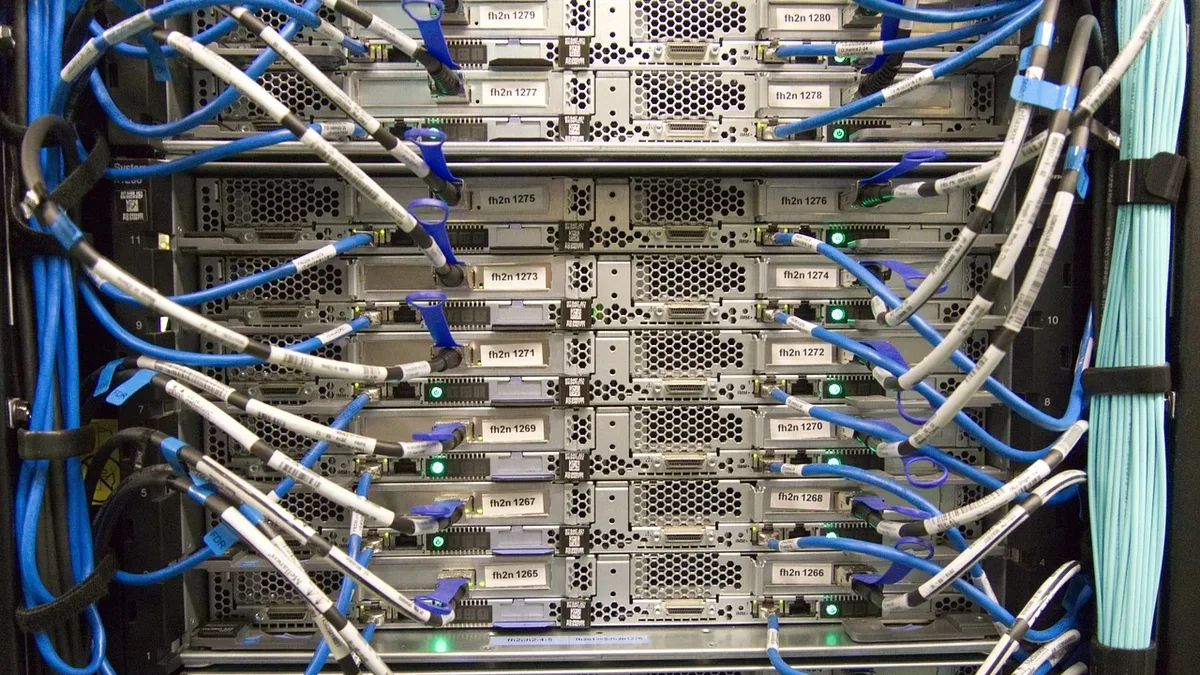
Rack power demands are climbing from 400 kW toward a megawatt and beyond as AI workloads intensify. The industry is shifting from traditional AC to 800 VDC power, with conversion moving outside the data center building to reduce losses and free up space.
800 VDC emerges as the solution for high-density compute
Traditional low-voltage AC architecture is being pushed beyond its original design limits. 800 VDC is being adopted to support next-generation high-density compute and is required for AI data centers moving toward megawatt scale. This shift results in less copper mass, higher end-to-end efficiency, and more physical room for servers.
Sidecars enable immediate 800 VDC deployment without infrastructure overhaul
Sidecars provide a near-term solution to introduce 800 VDC racks into existing facilities without redesigning electrical systems. This sidecar architecture enables immediate deployment without costly upstream infrastructure overhauls. Operators are advised to evaluate compute roadmaps early and set density trigger points at 400 kW to initiate 800 VDC sidecar planning.
DC architecture reduces conversion losses and simplifies redundancy
Moving power infrastructure outside the building enables a native DC architecture with fewer conversion stages and more compute space. Each conversion stage in traditional systems introduces losses, with heat from those losses increasing cooling demands. A white paper states traditional AC systems lose approximately 80 kW per megawatt delivered to the rack. Converting medium-voltage AC to 800 VDC outside the building reduces losses to approximately 20 kW.
Native DC architecture simplifies the interior to compute, cooling, and DC busway with fewer electrical components. It also allows two independent paths to supply a rack, sharing load and eliminating the need for traditional transfer events. Sharing load between DC paths reduces current on each path, lowering electrical losses while maintaining redundancy. The longer-term opportunity involves moving conversion outside the building to reduce losses, free up space, simplify redundancy, and enhance energy storage. Moving energy storage outside expands its role beyond backup to include smoothing AI power swings and grid services.
Safety and protection require specialized DC strategies
Shifting to 800 VDC alters how electricity behaves during a fault, requiring a rethinking of system topology, arc flash risk, and protection strategies. Direct current delivers constant voltage without zero crossings, requiring specialized protective devices such as semiconductor fuses or DC circuit breakers. Converter-fed 800 VDC faults unfold in two phases: an initial capacitive spike followed by current limitation by power converters. Modern solid-state converters limit fault current to roughly 150% of normal operating levels or shut down within milliseconds.
| Safety Metric | Traditional Context | 800 VDC Impact |
|---|---|---|
| Arc Flash Incident Energy (Sidecar) | Threshold for specialized PPE is 1.2 cal/cm² | Stays below 0.1 cal/cm² |
| Fault Current Reduction | N/A | Reverse current blocking devices reduce peak fault currents by over 80% |
| Incident Energy Reduction (Centralized) | N/A | Can be reduced by 70-to-90% with fast-acting converters |
Centralized architectures improve white-space efficiency but demand tighter electrical protection coordination. Dynamic transient simulation tools should be used instead of generic tables or simplified assumptions for accurate risk representation. Local code officials are often unfamiliar with 800 VDC data centers, requiring early engagement with detailed simulation results. Maintenance workflows must specify modular, live-swappable power components to allow service without powering down critical workloads. Procurement teams must demand transient performance data from hardware manufacturers, including converter shut-off speeds, capacitance values, and current-limiting behavior.