Electric school buses earn thousands as grid
Electric school buses are earning significant revenue by discharging power into local grids during peak demand periods, with pilots in Massachusetts and
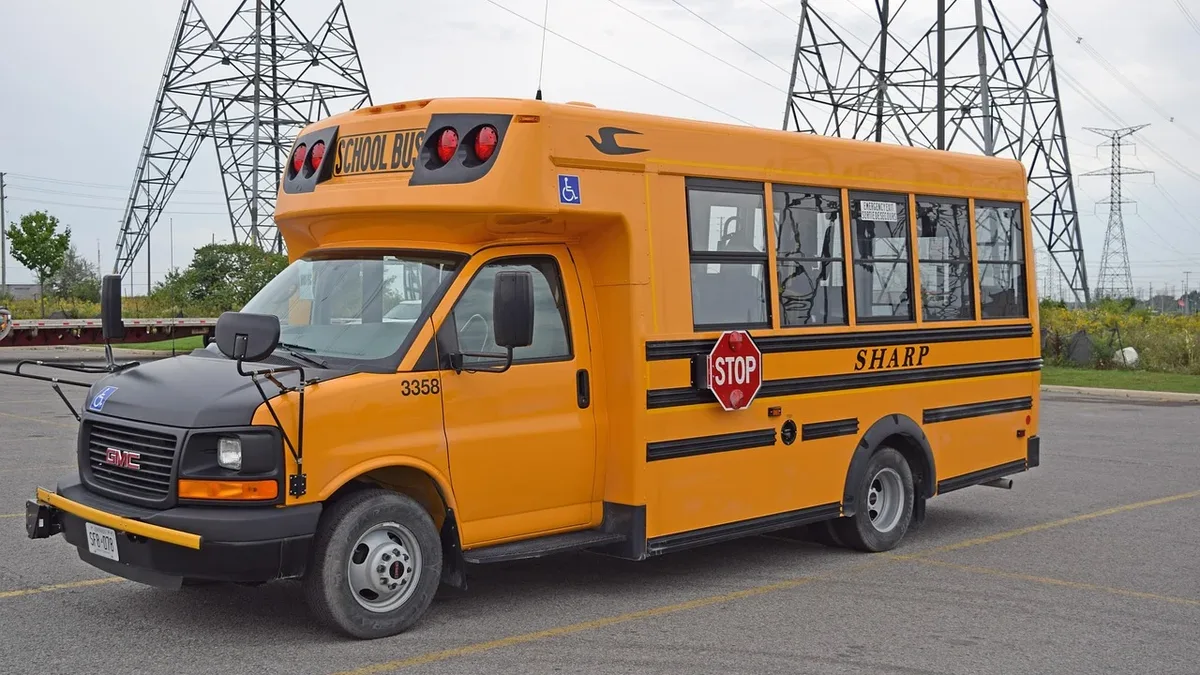
A single electric school bus earned nearly $12,000 in one season by discharging about 10.8 MWh of electricity into the suburban Boston grid during the summers of 2021 and 2022. The bus participated in National Grid's ConnectedSolutions virtual power plant program.
Elijah Sinclair, senior program manager for clean transportation with the Massachusetts Clean Energy Center, said the Beverly Public Schools pilot was key proof. MassCEC now has more than 20 buses in a broader vehicle-to-grid pilot that includes other commercial and private vehicles, backed by tens of millions of state dollars. "Beverly was key proof, but now we're helping to scale," Sinclair said.
According to the World Resource Institute's Electric School Bus Initiative, at least 26 utilities and 19 states have enacted vehicle-to-grid programs. U.S. School districts have more than 230 V2G-enabled buses in use, with hundreds more on the way, initiative spokesperson Tom Meyer told Utility Dive. While this is a small fraction of the more than 14,000 electric buses committed by districts, the deployments are earning income and proving the buses have "potential as grid assets" as storms, heat, and increased load stress the power system.
California hosts largest V2G bus programs
Many V2G-enabled buses are in Pacific Gas & Electric Company's Northern California service territory. The largest deployment is a 74-bus fleet operated by Zum for Oakland public schools. Each bus has its own bidirectional charger, supporting 2.1 GWh of annual discharge from the fleet.
Rudi Halbright, a PG&E product manager, said the biggest value for the Oakland fleet and the utility comes through the Emergency Load Reduction Program. What's the value of keeping California out of brownouts and blackouts? That's where they make the most guaranteed revenue, Halbright said. The Oakland fleet also participates in an hourly flexible pricing pilot, though Halbright said the pricing scheme is still a work in progress.
Zum plans to deploy 238 electric school buses at three depots in San Francisco over the next two school years. Halbright said this will be the biggest electric school bus fleet in the country, possibly the world, and its location on high-need circuits could make it more impactful for the local grid than Oakland's buses.
Southeast of Oakland, the Fremont Unified School District has 14 electric buses, with another eight on order. Four buses provide vehicle-to-grid services. Transportation manager Erny Epley said the buses typically return to the depot around 4:30 p.m. With batteries about 60% full, coinciding with PG&E's evening peak. They are available to discharge for five or six hours before charging overnight during super off-peak rates.
Epley said the required work is automated, with charge management provider The Mobility House handling the hardware and software. The Mobility House also works with Porterville Unified School District, where two bidirectional buses will support Southern California Edison's grid.
East Coast opportunities for connected buses
School districts and utilities in other states with high power costs and strong demand response frameworks also see potential. In New England, Zum said it will outfit the Branford, Connecticut, public school district with 46 bidirectional-capable electric buses by the 2026-27 school year.
Boston Public Schools said it will use a $35 million federal grant to purchase more than 100 electric buses, adding to its existing fleet of about 40. Ten of Boston's chargers are part of MassCEC's vehicle-to-grid program. Sinclair noted that if each bus earns $12,000 per summer, it creates a significant cash flow to pay back costs.
However, Duncan McIntyre, CEO of Highland Electric Fleets, which operates Beverly's buses, cautioned that not every bus will earn $12,000 yearly. More like $6,000 per year is the norm in Massachusetts, he said, due to differences in discharge patterns. To earn significant revenue, districts should expect higher upfront costs for bidirectional chargers and software, and ongoing operational expenses.
McIntyre said Highland can find vehicle-to-grid revenue opportunities just about anywhere, including in vertically integrated utility territories like Georgia, where Georgia Power has a monopoly. He suggested a utility could offer a capital offset by purchasing part of a bus's battery in exchange for years of load shifting services. Vehicle-to-grid is at the core of how we roll out our entire business, McIntyre added.
Room for improvement
The rollout has not been entirely smooth. A November report from Dominion Energy and the Electric Power Research Institute on a multi-year electric school bus demonstration in Virginia had bright spots, confirming the technical capability of bidirectional buses. It found 11 of 15 feeders studied had enough capacity to host a fully electrified fleet without upgrades. The report also noted room for improvement, highlighting that challenges remain for utilities, districts, and fleet operators.