Data Centers Eye Small Nuclear Reactors for
Data center developers and some US states are considering small modular nuclear reactors (SMRs) to meet rising energy demand, but experts warn commercial
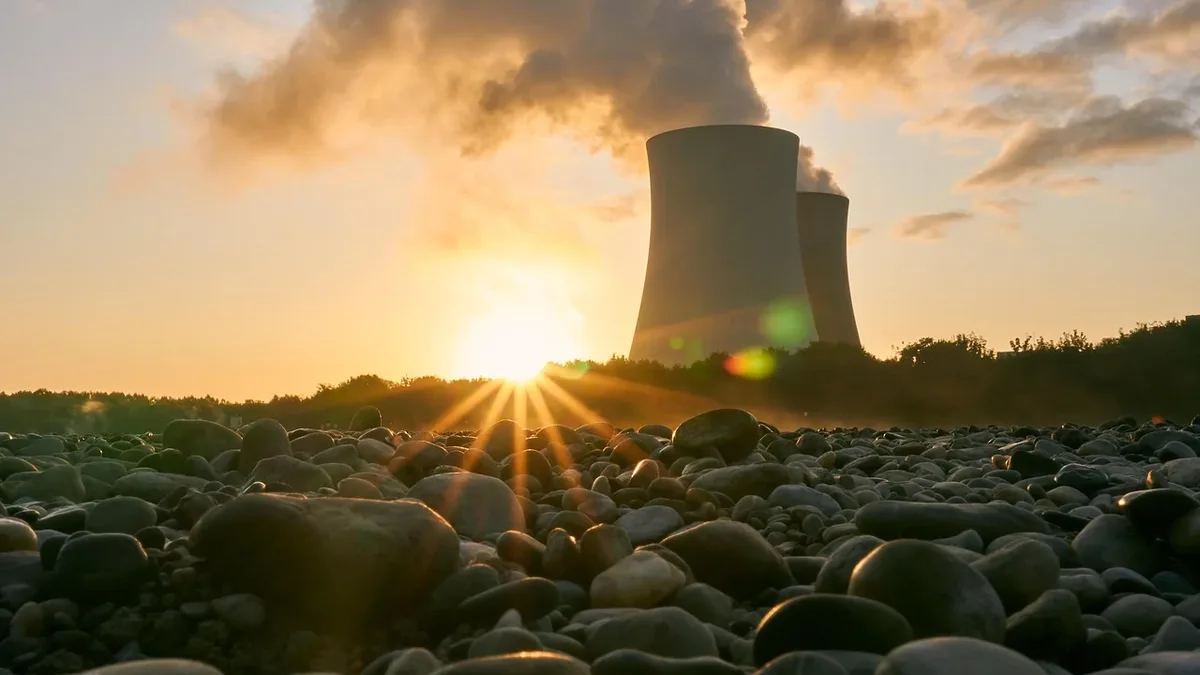
Data center developers and state governments see small modular nuclear reactors (SMRs) as a potential power source for America's growing energy needs. Nuclear energy experts, however, say the main obstacle is the timeline for their commercial availability.
According to a report from Inside Climate News, the U.S. Energy Information Administration defines SMRs as nuclear reactors designed to generate between 70 and 350 megawatts of power. The think tank Third Way notes 22 SMR designs are under development in the country. Only two designs, both from NuScale Power Corporation, have received approval from the Nuclear Regulatory Commission for the U.S. market. As of August, no commercial SMRs are fully deployed in the United States.
Appeal for Data Centers
For data centers, the appeal lies in the reactors' smaller physical size and steady power output. Brad Tietz, Midwest director of government affairs at the industry group Data Center Coalition, said many reactors could fit in just a couple of buildings, leaving space for the data center to grow. A 300-megawatt reactor can power hundreds of thousands of average American homes, though this is less than the 1,000 MW typical of larger reactor designs.
Patrick White, a fusion energy safety expert at the Clean Air Task Force, highlighted the core principles. "It's firm energy, it's available when you need it," White said. He noted it is clean energy that helps meet climate goals, offers high reliability, and has a small footprint. The preferred deployment model is co-location near a data center, with power still feeding the grid but avoiding new transmission infrastructure costs.
Cost and Deployment Challenges
Costs and deployment timelines present significant hurdles. Jonas Kristiansen Nøland, a professor at the Norwegian University of Science and Technology, cited the Darlington Project in Ontario, Canada, as the best evidence for SMR costs. The Ontario government projects building four GE Vernova Hitachi BWRX-300 SMRs will cost $140 per megawatt-hour for the first reactor and about $80 per MWh for the other three.
| Project/Technology | Estimated Cost per Megawatt-Hour |
|---|---|
| First BWRX-300 SMR (Darlington) | $140 |
| Subsequent BWRX-300 SMRs (Darlington) | ~$80 |
| Wind & Solar LCOE (Lazard data) | Under $40 to $86 |
This cost is higher than the levelized cost of electricity (LCOE) for wind and solar, which ranges from under $40 to $86 per MWh according to financial advisory group Lazard. Tietz from the Data Center Coalition acknowledged the technology is not widely available. "You're looking at a multi-year process for regulatory approvals," he said, calling it a future opportunity but not an immediate solution.
Industry Skepticism and State Moves
Some experts express deep skepticism about near-term viability, particularly regarding leading company NuScale. Adam Stein, director of the Nuclear Energy Innovation program at the Breakthrough Institute, noted that while the tech industry can "fail fast," nuclear startups cannot afford to. He said NuScale, after 15 years, has yet to find a solid customer.
Edwin Lyman, director of nuclear power safety at the Union of Concerned Scientists, was more blunt. He called NuScale developments "just talk" and said investors are catching on. "They've been promising for years now that they have deals right around the corner, and nothing happens," Lyman said. He referenced NuScale's canceled project with the Utah Associated Municipal Power Systems, where plans for twelve 600 MW reactor modules collapsed in November 2023 due to rising costs.
Despite the challenges, some states are pushing for development. New Jersey Governor Mikie Sherrill signed a bill in July to invest in advanced nuclear energy, including SMRs, to meet growing energy needs. In the Mid-Atlantic region served by PJM Interconnection, campaign director Clara Summers of Consumers for a Better Grid said a big part of increasing consumer utility bills is attributable to data center demand.
Victor Ibarra Jr., senior manager for nuclear energy at the Clean Air Task Force, said impacting U.S. load growth requires investment in manufacturing capacity, as supply chain issues hinder commercialization. Lyman warned that financial pressure for quick deployment might encourage cost-cutting on safety, calling co-location with data centers an unrealistic model given the risks of a radiological release. He criticized what he called the nuclear industry's "fine-tuned PR machine."