Europe EV sales hit 26% market share in July
Battery electric vehicle registrations in Europe surged 51% in July to 288,000 units, capturing a 26% market share. Plugin vehicles overall held 38%.
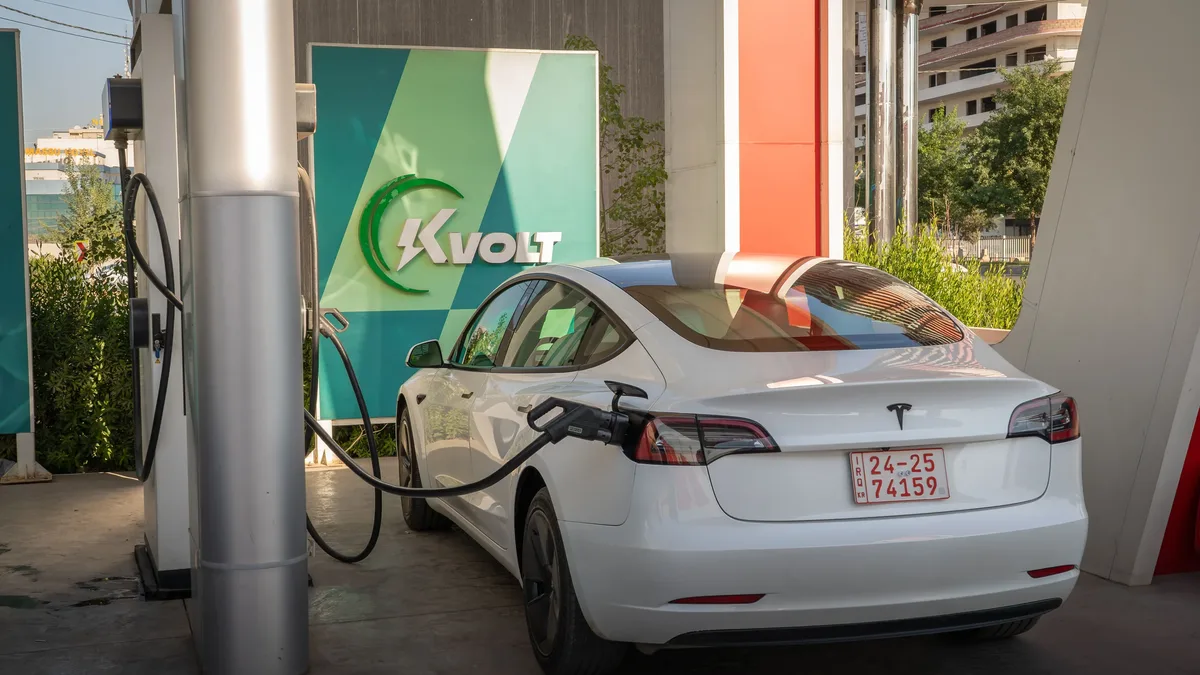
Europe registered 288,000 fully electric vehicles in July, a 51% increase year-over-year. This surge pushed the battery electric vehicle market share to 26% for the month.
Overall plugin vehicle registrations, which include plug-in hybrids, grew 40% year-over-year. Plug-in hybrids themselves grew 21% to 137,000 units. The combined plugin share for July reached 38%.
With BEVs leading the expansion, the year-to-date share for fully electric vehicles now stands at 23%. The combined share for all plugin vehicles is 34% so far this year. These figures already surpass the final results for 2025, which were 20% for BEVs and 29% for all plugins.
Regional Disparities in Electrification
The report notes that electrification is advancing at different speeds across Europe. Northern European nations show significantly higher adoption rates.
| Country | BEV Market Share |
|---|---|
| Norway | 98% |
| Denmark | 80% |
| Finland | 53% |
| Sweden | 43% |
| Netherlands | 47% |
| Belgium | 43% |
| Italy | 6% |
| Czechia | 8% |
The source suggests full electrification will happen at different times. Some markets may approach 100% BEV share by 2030, while others might not reach that level until around 2040.
Segment Analysis and Top Models
Electrification progress varies by vehicle segment. The city car category is poised for early full electrification, with several new models entering the market. The Renault Twingo placed fourth overall in the A-segment, close behind the third-place Kia Picanto and ahead of the Fiat 500.
In the B-segment, only the third-place Peugeot 208 offers some electrification, with 24% of its sales coming from the BEV version. The C-segment shows moderate electrification: the leading Volkswagen Golf derives 14% of sales from its PHEV version, while the third-place Volkswagen Tiguan gets 34% from PHEVs.
The midsize category shows stronger electrification even without considering Tesla. The top-selling Mercedes GLC sees 52% of sales from BEV or PHEV versions. The runner-up BYD Seal U is fully electric. The third-place Mercedes CLA gets 70% of sales from its BEV versions.
In the full-size category, the leading BMW 5 Series has 62% of sales coming from i5 BEV units or PHEV versions. The second-place Mercedes E-Class is 40% electrified via PHEVs. The third-place BMW X5 gets 32% of sales from its PHEV version.
The report identifies the B and C segments as laggards in electrification, despite being the most important categories in the European market.
July's Top Selling EVs
The Skoda Elroq was Europe's best-selling electric model in July with 9,996 registrations. The BMW iX1/X1 PHEV twins took second place with 9,883 registrations. An interesting trend within this model pair shows the BEV version's share increasing from 62% to 74% year-over-year, while PHEV sales dropped by approximately 1,300 units.
The BYD Seal U secured third place with 9,575 registrations. The report attributes this performance partly to generous discounts. The Renault 5, including the Alpine A290 variant, achieved fourth place with 9,474 sales, a 52% increase year-over-year.
Volkswagen's ID.4 rounded out the top five with 9,009 registrations, a 39% improvement over the previous year. This performance comes despite the model being slated for a deep refresh and a name change to ID.Tiguan later this year.
Outside the top five, the new BMW iX3 placed eighth with 7,873 registrations. The report also highlights the upcoming arrival of new models like the Dacia Spring, a new Smart #2, and a future Volkswagen city car potentially called the ID.Lupo.
Source: CleanTechnica