California Dairy's Biogas-to-Hydrogen Project Gets Record-Low Carbon Rating
A California dairy farm's biogas-to-hydrogen project has received the lowest carbon-intensity rating in state history.
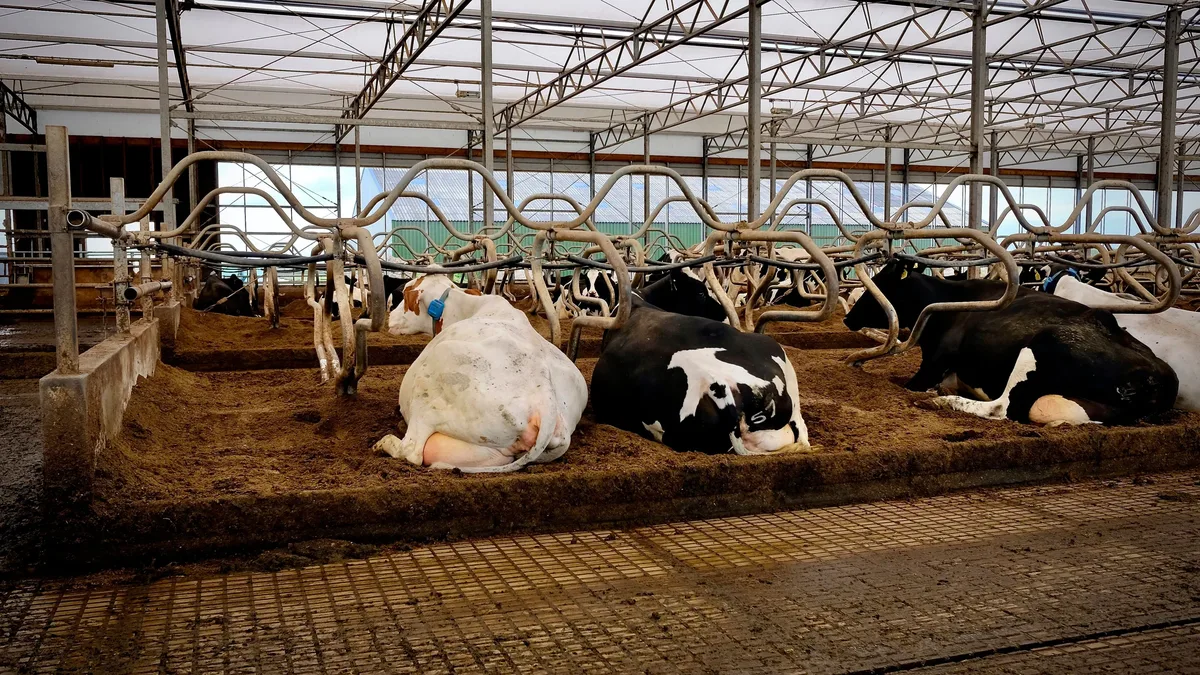
A California dairy farm's biogas-to-hydrogen project has been assigned the lowest carbon-intensity rating in the history of the state's Low Carbon Fuel Standard (LCFS). The project at the Bar 20 dairy in Kerman, which houses roughly 13,000 cows, is converting captured methane into hydrogen for transportation fuel.
The California Air Resources Board (CARB), which administers the LCFS, approved the project in July. A CARB spokesperson, Lindsay Buckley, told reporters the project is groundbreaking because it converts waste into electricity using a fuel cell and also turns biogas into hydrogen.
How the Project Works
Manure from the Bar 20 dairy is processed in a covered anaerobic digester that captures methane. The captured biogas is then used to generate electricity through a combination of a fuel cell and a reciprocating engine. Some of this electricity powers an electrolyzer to produce hydrogen from water. The gaseous hydrogen is trucked to refueling stations in California.
The project received a carbon intensity (CI) value of -1887.35 grams of CO₂-equivalent per megajoule. This is a measure of the greenhouse gas emissions a fuel is responsible for relative to the energy it produces. A lower CI value grants the fuel producer greater carbon credit value under the LCFS.
Environmental Debate and Criticism
The record-low CI score has reignited a debate between regulators and environmental groups. Nonprofits including the Leadership Counsel for Justice & Accountability, the Animal Legal Defense Fund, and Food & Water Watch argue the climate benefits are overshadowed by local pollution from dairy waste lagoons.
These groups contend that capturing methane does not address contamination of local water supplies by nitrogen, phosphorus, and ammonia. They also worry the LCFS incentivizes dairy herd expansion, creating more waste. CARB has disputed that digesters are a factor in accelerating herd growth on farms.
Tyler Lobdell, a senior staff attorney at Food & Water Watch, called the CI value "bogus" and said it supports a harmful incentive structure. Christine Ball-Blakely of the Animal Legal Defense Fund argued that intentionally created methane from mega-dairies should never be classified as renewable fuel.
The Broader Biogas Context
Kevin Fingerman, a professor of energy and climate at California State Polytechnic University, Humboldt, noted that energy is lost with each conversion step. For a given amount of methane captured, this project delivers less final fuel than simpler biogas projects because it converts gas to electricity and then some electricity to hydrogen.
Fingerman's research indicates that at least $589 million in state and federal funding has been directed to dairy digester infrastructure in California since 2014, not including market incentives like the LCFS. He said LCFS revenue may skew dairy economics toward large, lagoon-based operations by creating a substantial revenue stream from biogas offsets.
Brian Visser, a dairy manager at Bar 20, stated the hydrogen produced provides significant air quality and climate benefits consistent with state policy goals. The dairy and the technology company, H2B2, did not respond to questions about project operations or environmental concerns. CARB highlighted that since the LCFS began, over 31 billion gallons of fossil fuels have been displaced by lower-carbon alternatives.
Source: Inside Climate News