Boston Explores Sea- and River-Source Heat Pumps for Big Buildings
Boston and neighboring Cambridge are home to three projects that plan to tap the city's rivers and harbor to provide emissions-free heating and cooling to some of the area's largest institutions.
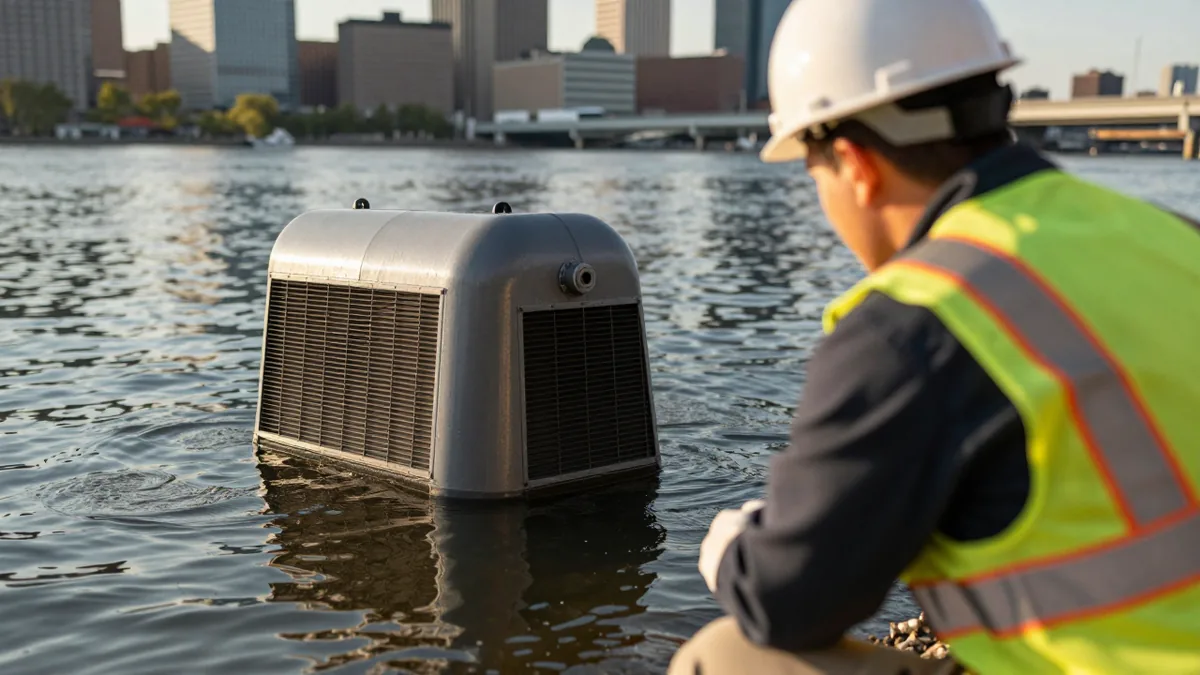
Boston's waters, famous for the 18th-century tea party, could soon be the site of a new kind of disruption. The city is launching a thermal revolution by tapping into the thermal energy stored in its rivers and harbor.
The concept of the heat pump, a device that pulls heat from one place and deposits it in another to warm or cool a space, is over 150 years old. However, the technology has become a major part of the clean energy conversation in recent years. Air-source heat pumps are hailed as an efficient way to shift homes off natural gas and heating oil, and sales have soared in the past several years.
The Boston area's forays into river-source and sea-source heat pumps could open up a whole new way to decarbonize building operations, supporters say. Conventional geothermal projects can be challenging to build on a large scale in Boston, said Lindsey Butler, executive director of the Boston Green Ribbon Commission.
Water has other advantages as well. Water temperatures vary less than air temperatures, making Boston Harbor and the Charles River more efficient sources of thermal energy.
The Boston Area Thermal Energy Network Project, or BosTEN, aims to determine how best to provide heating and cooling to major institutions using the energy stored in Boston Harbor, the Fort Point Channel, the Charles and Mystic rivers, and the bedrock beneath the rivers.
The feasibility project's kickoff event was held at the University of Massachusetts Boston, a nod to the school's long-standing use of seawater for climate control. Since the 1970s, the coastal campus has relied on water for cooling, drawing heat away from the facilities and transferring it into the harbor. Now, the school is in the process of adding equipment that will allow it to do the reverse: draw energy from the seawater to warm classrooms, laboratories, and dorms across 12 different buildings.
The university project is in the design phase, and currently going out to bid. When completed, the new system will meet the majority of the campus's heating needs and reduce the use of natural gas by 82%. A later phase will add more equipment, getting that number nearly to 100%, said James O'Day, the university's director of utilities, energy management, and laboratories.
At the same time, energy company Vicinity Energy is in the midst of overhauling its systems to use thermal energy from the Charles River to produce the steam that delivers heat to its network of large institutional customers in Boston and Cambridge. The project's 35-megawatt heat pump will be the largest in North America, at least for a little while, said Matt O'Malley, Vicinity's chief sustainability officer.
The trio of Boston-area projects could promote more widespread adoption of such thermal networks. Advocates are optimistic that the support of universities, state and city governments, hospitals, and environmental nonprofits bodes well for the future of these systems.
Boston's Thermal Energy Projects
| Project | Description |
|---|---|
| Boston Area Thermal Energy Network Project (BosTEN) | Feasibility project to determine how best to provide heating and cooling to major institutions using the energy stored in Boston Harbor, the Fort Point Channel, the Charles and Mystic rivers, and the bedrock beneath the rivers. |
| University of Massachusetts Boston | Adding equipment to draw energy from the seawater to warm classrooms, laboratories, and dorms across 12 different buildings. |
| Vicinity Energy | Overhauling its systems to use thermal energy from the Charles River to produce the steam that delivers heat to its network of large institutional customers in Boston and Cambridge. |
The Future of Thermal Energy
The trio of Boston-area projects could promote more widespread adoption of such thermal networks. Advocates are optimistic that the support of universities, state and city governments, hospitals, and environmental nonprofits bodes well for the future of these systems.
Zeyneb Magavi, executive director of the Home Energy Efficiency Team, envisions a thermal loop laid on the seafloor in Boston Harbor, serving the first round of large institutions, then expanding to add more loops and more customers over time.
The Boston Area Thermal Energy Network Project aims to have final recommendations available in spring or summer of 2027, and to get building as soon as possible after that.
Source: Canary Media